
When to Centralize Software Purchasing
Centralized purchasing saves money and reduces sprawl, but it can also slow down teams and kill agility. Here's how to structure procurement authority as you scale.
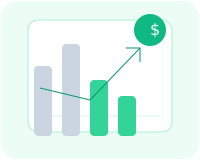
Businesses with decentralized purchasing have 40% more tools and pay 25% more per tool than those with centralized procurement
Every credit card is a procurement department. When everyone buys independently, the stack grows without strategy — and cost follows.
Centralization does not mean bureaucracy. A lightweight approval process for tools over a threshold creates control without friction.
Benefits of centralized purchasing
- Better negotiation leverage with fewer but larger vendor relationships
- Elimination of duplicate tools serving the same function
- Consistent security and compliance evaluations
Centralized purchasing helps reduce tool count and per-tool costs while improving compliance.
Centralized purchasing means one person or team owns every software buying decision. It's the single most effective change an SMB can make to control software costs.
Signs you need centralization
Decentralization warning signs
- Multiple tools in the same category with no single owner
- Employees expensing tools without approval
- No one can list all active subscriptions from memory
- Duplicate or overlapping tool functionality across teams
- Different billing cycles and payment methods for each tool
Centralization doesn't mean bureaucracy. It means one person reviews every purchase against the current stack, checks for overlap, and negotiates the best price. It takes 15 minutes per purchase and saves thousands.
The risk of centralization is creating a bottleneck. Set clear authority tiers: manager-approved under $50/mo, department-head up to $500/mo, CFO over $500/mo. Fast approvals for small purchases prevent frustration.
Centralized purchasing creates a single view of your stack. When you can see every tool, every cost, and every owner in one place, you can optimize the whole system instead of reacting to individual purchases.
Centralization impact
Stack health by purchasing model
Every credit card is a procurement department. When everyone buys independently, the stack grows without strategy — and cost follows.
Run the free audit to see how many independent purchasing decisions created your current stack — and whether centralization would reduce your costs.
- Building a Business Case for New Software
- How AI Can Replace a Fractional CFO for Software Purchasing Decisions
- How Much Should a Small Business Spend on Software (By Revenue)?
- How to Benchmark Your Software Stack Against Competitors
- How to Build a Software Procurement Policy That Actually Works
- How to Read a Software Case Study Critically